






The Child Mind

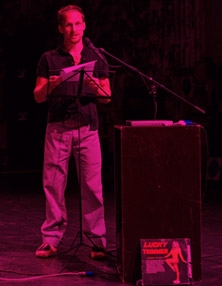
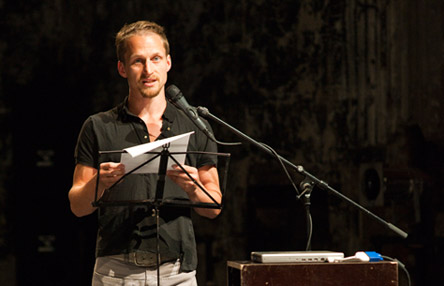
Presented by Amy Stafford
Hi – I’m Amy Stafford and I’ve been doing the LT flyer designs that you might be familiar with. Before I get started, I want to ask you all a question. Who of you in the audience put on informal dance performances for your family when you were little kids? Raise your hands – there has to be at least a couple of you out there. OK – Now how many of you are still dancing and putting on performances – maybe for more than just your family?
Ok – so that looks to be about X% of those who danced as kids. Interesting…
When I was a little kid I danced too. I would make up routines and map out my steps following the patterns on one of the Persian rugs my parents had. I would get lost in the movement, the wiggles and skips – and forget about everything else. At that age music was sort-of secondary to the dancing, but being the early 70’s, it was generally fun, trippy stuff– like late Beatles and the Mama’s and the Papas.
As the 70’s wore on, the music changed and so did my dancing habits. My mother, perhaps noting the somewhat spastic nature of my self-styled techniques, placed me in a ballet class to get classical training and perhaps learn some grace. I instantly hated it. I was confused by the rules and baffled by all the positions. I felt ridiculous in the requisite pink tights and black leotard and my leg didn’t reach the bar like the other little girls. Every Wednesday I would find another illness to fake – a stomach ache, dizziness, ear infection, just so I wouldn’t have to go to that damn ballet class after school.
I still danced at home to the Bee Gees and the Saturday Night Fever soundtrack., but less and less frequently. This was the last album I boogied down to in that innocent, childish way - though I had stopped putting on performances for my parents long before that. It wasn’t just the music that had changed – I was changing too – becoming more aware of what other people would think of me. Afraid of how I was perceived and the mistakes I inevitably made.
It was about this time when my school tested all the students for Dyslexia. It was the first time I scored the highest in my class on an exam. At the time, Dyslexia was considered a learning disability – a failure to measure up and keep up with the rest of the class in subjects like Math, Language and even Physical Education. While everyone else breezed ahead with their multiplication tables and spelling, I stumbled and groped in my academics but found comfort in things like drawing horses and staring out the window. So – to help keep me on track I had extra training during my class’ free study period. While all the other students sat at their desks and worked on projects, I had to get up and leave the room to meet my tutor, Mrs. Griffin, in another building. I could feel the other student’s eyes following me, the dumb kid, all the way through the classroom and out the door. The more I learned that I just didn’t get the rules of grammar and multiplication tables, the less I danced, until one day I gave it up completely. I had traded in movement for a world in my head – expressed through watercolors and fruit scented pens. The visual arts became my escape from the cruel world of 5th grade.
These days when children are identified as having Dyslexia their parents are told: “Congratulations, your kid has Dyslexia.” And we are in good company - with talents like Leonardo Da Vinci, Sir Richard Branson, Agatha Christie, John Lennon, Albert Einstein and even Picasso - who commented that:
Every child is an artist. The problem is how to remain an artist once he grows up.
Dyslexia is now considered a gift because it gives you the ability to perceive the world in ways that most people don’t - in patterns, stories and far flung associations. It favors the right brain, the hemisphere traditionally neglected by academics, conventional education and the grown up world of rational thought.
As Clint mentioned in his talk, the brain researcher Jill Bolte Taylor described observing the experience of her stroke as it shut down the left hemisphere of her brain. The left hemisphere controls logic, numbers, language, rational thought and even competition. It breaks things into separate parts – into a “you and me” and “I am this, but not that”. While the left side of her brain shut down, her right side took over. The right hemisphere favors intuition, emotion, creativity and non-linearity. There is no “me and you” in the right brain, there is only a giant we. In Jill Bolte Taylor’s experience the stroke unleashed an awareness of her expansive consciousness and an interconnection with the universe that was so great that it was hard for her to believe she could fit back into her human sized body.
Interestingly, before children are shuffled off to school to learn reading, writing and arithmetic - before they are pressed into rational shapes with rules, their creative, non-linear right brains are dominant and functioning at full capacity while the left brain lies dormant. Perhaps you remember this unbounded creativity from your own childhood, or have watched children at play. Play is their natural state. Little kids will try anything – take a chance, give it a shot. They aren’t afraid of being wrong. They see connections and truths where adults get caught up in social constructions, limitations and categories.
As grownups we have extinguished this creative impulse out of fear of making mistakes. Our success and achievements are typically honored in the realm of the head, disconnected from our bodies. We are expected to think, judge, analyze, plan and stare at computer screens, but rarely do we dance our way through a day. This is not to say that our bodies are dead – but we have learned not to trust them. They deserve to be coaxed back to life, to wake up to the energy that flows through them and the intelligence embodied within them – all the way from your overactive head down to the tips of your toes. In the same way that we can reconnect our heads with our bodies, creativity triumphs in the bringing together of surprising contrasts – activating a correspondence between the right and left brain – in the merging of unrelated elements - never before put together in such a surprising way. I dare you to try experiencing the world through the Child Mind - take chances, risk being the fool, break rules and sweep the paintbrush far and wide outside the lines of your life’s coloring book.
And so, you may be asking why all this jibber jabber about Dyslexia, brains and little kids. Well, it’s all to explain in very personal terms why, as the designer and communication strategist for Lucky Trimmer, I have developed a body of promotions (notice it wasn’t a head of promotions I made) –like flyers, a logo and other graphics - that celebrate the child mind. Each flyer uses a different picture of a kid – whether at play, performing or striking a pose. They harness the magic of Dyslexia too – ignoring strict rules and logic for stories and slowly emergent patterns.
It started innocently and accidentally enough, when Clint and Uwe intuitively used the now famous picture that had been hanging on their wall at home - of a chubby, awkward little boy on the beach. After that first show it was clear there would be a second - and I offered to come on board as their designer. A graphic concept hadn’t yet been developed – and the next flyer, featuring a photo of the dancer Uhn Me, just didn’t have the sparkle of the photo of that first little boy. So when it came time to create the third flyer I proposed we go back to using images of kids – since we were becoming clearer about what Lucky Trimmer was all about. Smart, playful and always different.
So – like the variation in the shows themselves, there is no strict format with the designs and no layout system to squeeze the graphics into. They are always unique but each one tells the story of Lucky Trimmer in a recognizable way. The idea was to create a flexible design framework using kid photos that gets to the heart of the Lucky Trimmer spirit. We trusted that over time an identifiable pattern would emerge and it has. Sure, the promotions are cute and fun and easy to understand. But it is not about being cute for the sake of it.
Each flyer, in its own way celebrates this time we have as kids, BEFORE logic and rationalism and fear are impressed upon us. For this is the energy that Lucky Trimmer champions in the performances we present. Creativity without the constriction of rules, intelligence without heady-ness– experimenting and risk taking in a safe space designed precisely for that. Each installment of the series is different – presenting surprising new short pieces in an unpretentious way. Similarly, each flyer is different – cheerfully building up the idea of what Lucky Trimmer can be. We make a space for excellent, under-represented ideas to reach an audience - fueled by child-minded inventiveness and sprinkled with the wisdom of experience. We are always professional but don’t claim to be experts. Much like kids, we are still making it up as we go along - we keep running ahead and ignoring the rules that would try to stop us. Frankly we cannot afford to wait for the official experts to give us permission or fund our efforts. Life is too short not to dance – so lets get moving!